If you're running a managed services business, you already understand the fundamental economics: Grow MRR, deepen client relationships, and scale without proportionally scaling your costs. That logic has driven the shift to subscription models across IT services, cybersecurity, backup, and cloud infrastructure. Video Surveillance as a Service (VSaaS) is the next natural move, and for MSPs who act on it early, it represents one of the more compelling recurring revenue opportunities available right now.
VSaaS is the delivery of camera-based surveillance through a subscription model rather than a traditional hardware-and-software sale. The underlying technology isn't new. IP cameras and network-connected video management systems have existed for years. What’s newer is the business model, which has evolved to create a natural fit for how MSPs already operate. The shift from on-premises, integrator-installed systems toward cloud-connected, software-defined surveillance creates an opening for MSPs to do what they do best – manage infrastructure remotely, deliver it as a service, and own the client relationship.
The VSaaS Opportunity – Why Now?
Physical security and IT have been converging for years, but most MSPs haven't fully capitalized on it. IP cameras and access control systems run on the same networks they already manage, and clients – especially in retail, healthcare, logistics, and commercial real estate, among other sectors – increasingly expect their IT providers to handle surveillance alongside everything else. The traditional alternative – engaging a security integrator for a one-time installation – can leave clients with a system nobody is actively managing. In that situation, when cameras go offline, storage fills up, or firmware needs patching, there’s nobody to handle it (or it places an additional burden on already scarce internal resources). That's exactly the kind of unmanaged infrastructure gap MSPs are well-positioned to close.
The timing is ideal, with underlying platform technology having caught up with the MSP delivery model. Legacy video management systems were better suited for security integrators, with one-time installs, on-premises software, no recurring revenue component, and no architecture for managing multiple clients at scale.
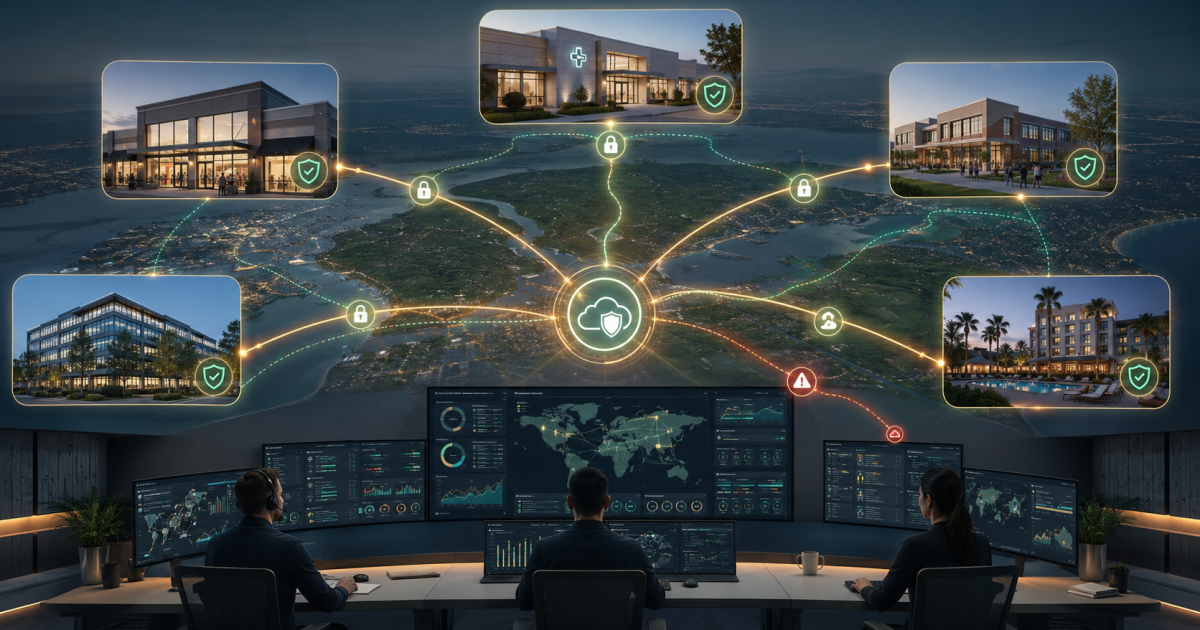
VSaaS changes the paradigm. A subscription-based VMS enables per-camera licensing and monthly billing, and is managed through a cloud platform. The billing maps directly to MRR and remote deployment and multi-site management are built into the platform. In addition, the ongoing subscription model creates continuous client engagement, rather than a project that ends when the cameras go up. For MSPs, it's the same operational model they apply to every other service in their stack – it just happens to manage cameras instead of other endpoints.
Bundling makes the economics even more attractive. Video surveillance rarely needs to be sold as a standalone offering. The more natural play is adding it as a line item within an existing service package, alongside endpoint protection, backup, and network monitoring, so clients see a single monthly bill covering their full technology environment, and MSPs capture more revenue per account without a separate sales motion.
The Economics of a Sticky Revenue Stream
For MSPs, lilke other services, VSaaS economics improve as their deployment base grows. A well-designed platform lets your team manage hundreds of cameras across dozens of clients from a centralized interface. It’s the same model that makes RMM-based IT services profitable. Adding a new client deployment doesn't require adding headcount, and hardware-agnostic platforms let clients use cameras they already own (or allow them to choose based on their preference), rather than forcing them into proprietary equipment. MSPs that control their own pricing, rather than being constrained by a vendor's reseller program, can structure deals that reflect the value they're delivering and protect their margins as the business scales.
Client retention is strong with VSaaS, which factors into the long-term revenue outlook. Once a surveillance system is deployed and woven into a client's daily operations, the switching cost is real – replacing cameras, retraining staff, migrating video history all requires effort and expense. The stickiness that is inherent to VSaaS provides a high-value opportunity – even moreso than many other managed services – because it grows over time as clients add cameras, upgrade storage, or layer in analytics and access control integrations.
Every VSaaS engagement represents a deeper footprint in the client's environment and a higher cost of departure. For MSPs thinking about lifetime client value, that's a meaningful value proposition.
Getting Started, and Choosing the Right Platform
The expansion path into VSaaS doesn't have to require a dramatic pivot. The most natural entry point is existing clients with aging or unmanaged camera systems (e.g., installations done years ago by an integrator, running on outdated firmware, with no active oversight). Bringing that infrastructure under management as an extension of an existing IT services agreement is a low-friction conversation within a relationship the client already trusts. From there, the goal is a standardized service offering, including defined tiers around camera count, storage, and monitoring level, that is easy to quote and easy to deliver at scale. Vertical-specific capabilities built on that foundation, incorporating analytics or access control for healthcare, retail, or multi-site clients, open the door to premium pricing and deeper engagement.
Platform selection matters because not every VMS is built for managed service delivery. The key requirements include:
- Multi-tenant management
- Hardware agnostic
- Remote deployment capabilities
- Open API integration with PSA and RMM tools
- MSP-controlled pricing
- Security certifications that satisfy clients in regulated industries
Nx Witness was designed with this profile in mind. It's a subscription-based VMS built for IT-centric environments, with centralized multi-client management, compatibility with the vast majority of IP cameras on the market, white-label options that keep the client relationship under the MSP's brand, and ISO 27001 and SOC 2 Type 2 certifications. Nx Witness fits into an MSP's existing operational model, rather than requiring a new one to be built around it, which is ultimately what separates a sustainable new service line from a distraction.
Edited by
Erik Linask