For years, phishing has been treated primarily as a user awareness problem. Organizations trained employees to recognize suspicious emails, warned them not to click unknown links and layered inboxes with banners and filtering tools. That approach still matters, but it is no longer sufficient. Phishing has changed.
Attackers are no longer relying on obvious scams or poorly disguised messages. They are studying how modern software communicates and designing attacks that mirror it. The result is a new generation of phishing emails that feel routine, look operational and blend into everyday workflows.
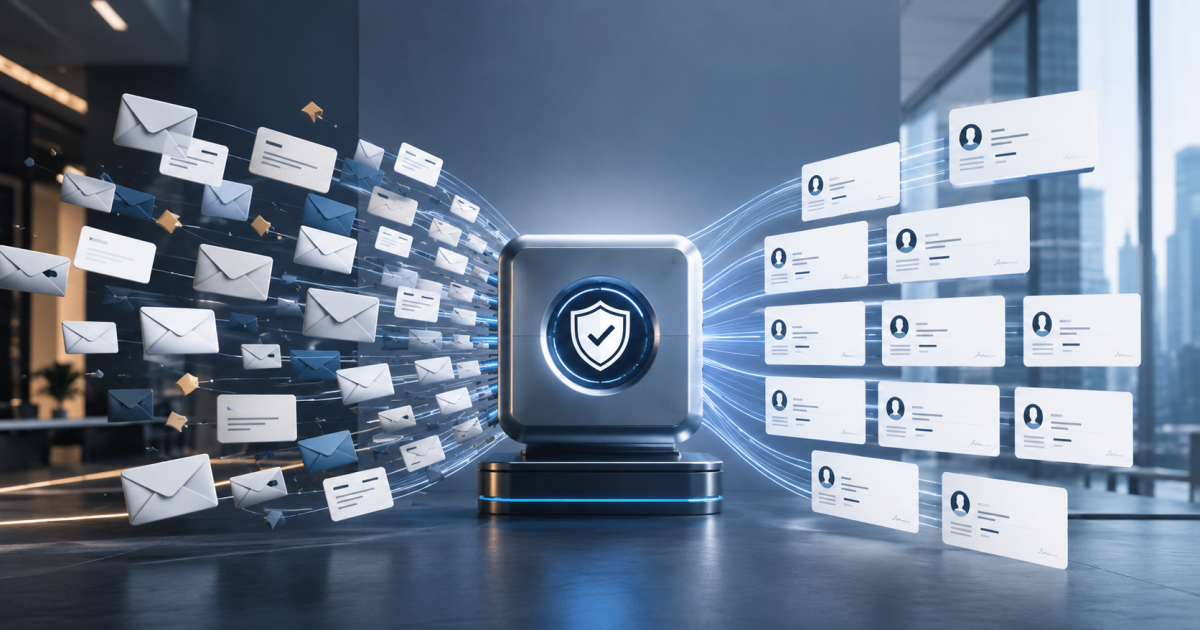
Email is no longer just a communication channel. It is infrastructure, powering authentication, transactions and critical alerts across nearly every digital experience. And like any infrastructure, when it is compromised or poorly governed, the impact does not stay contained. It spreads across systems, disrupts operations and erodes trust over time.
Phishing is following the flow of modern software
One of the most notable shifts in phishing is the move away from single-industry targeting. Financial institutions were once the primary focus, but attackers now rotate across sectors with ease. E-commerce platforms, technology companies, SaaS providers and even government services are all being impersonated in rapid succession.
Based on Mailtrap analysis of email traffic and emerging phishing patterns, several trends are becoming clear. Attackers are not just evolving tactics. They are aligning closely with how modern software systems communicate and how users interact with them.
Users now expect a steady stream of transactional emails across multiple platforms in a single day. A developer logs into a tool, requests a password reset, checks their inbox and expects it to arrive instantly. A recruiter receives candidate alerts from hiring platforms. A finance team processes invoice notifications and payment confirmations. Attackers are embedding themselves directly into that flow, making malicious emails feel like a natural extension of routine system activity.
At the same time, SaaS impersonation is accelerating. CRM systems, recruiting platforms, finance applications and internal tools have become high-value targets because they sit at the center of daily operations, where messages are expected to prompt action.
“Users inherently trust the systems they rely on to do their jobs,” said Illia Chiernov, email deliverability expert at Mailtrap. “Attackers understand that trust and are designing emails that look and behave like those systems.”
Mailtrap research shows attackers increasingly mimicking platforms like Odoo with fake invoice or payment failure notifications, recruiting tools with “new candidate message” alerts and internal systems with prompts such as “you’ve been assigned a task” or “new document shared.” These emails do not look unusual. They mirror the structure, tone and timing of legitimate system messages.
That trust has been built over years of consistent, automated communication between businesses and users.
Transactional email is now the primary attack surface
Phishing has shifted toward transactional email. Traditional campaigns that mimicked marketing messages are being replaced by attacks built around system-generated communications such as password resets, payment failures, invoice notifications and account alerts.
“These messages are effective because users are conditioned to act on them quickly,” said Chiernov. “They are tied directly to access, revenue or service continuity. Attackers are not just copying branding. They are replicating workflows, including tone, structure and calls to action, making phishing emails blend in with legitimate system messages.”
In practice, this often looks like a password reset email that arrives seconds after a login attempt, a “payment failed” alert tied to a subscription service or an “invoice ready” notification that mirrors accounting software workflows. The timing is not accidental. These messages are designed to align with expected user behavior, increasing the likelihood of immediate action.
This is where infrastructure visibility becomes critical. When organizations lack a clear understanding of how their transactional emails are generated and delivered, it becomes harder to distinguish legitimate communication from imitation.
Urgency has evolved as well. Instead of relying on fear-based messaging, attackers now focus on service disruption. Messages such as “payment failed” or “account will be suspended” feel routine, which lowers skepticism and increases engagement.
“These messages do not feel like attacks,” Chiernov said. “They feel like routine system notifications.”
The illusion of personalization at scale
Attackers are also refining how they simulate personalization. Rather than using real data, they rely on structured placeholders that create the appearance of legitimacy. Generic greetings paired with reference numbers, order IDs or ticket numbers can feel credible, even when reused across campaigns.
At the same time, domain mismatch remains a reliable technical indicator of phishing. Emails may appear legitimate, but embedded links often point to unrelated domains. The challenge is that users are less likely to verify those details when the message feels consistent with normal workflows.
As phishing becomes more contextually accurate, behavioral detection becomes less effective. That places greater emphasis on infrastructure-level controls to identify risks before messages reach users.
Blended content and compromised infrastructure
Content blending is another growing tactic. Attackers combine multiple narratives within a single email, increasing the chances that at least one element will prompt engagement while helping bypass filters.
For example, a single message may include an “invoice attached” notice, a secondary prompt to “review account activity” and a link labeled as a document preview. Even if one element raises suspicion, another may still drive a click.
At the distribution level, compromised accounts are increasingly used to send phishing emails. Dormant or low-activity accounts, such as unused employee inboxes or lightly monitored SaaS accounts, are hijacked and repurposed. This allows attackers to send messages from legitimate domains, sometimes even within existing email threads, making detection significantly harder.
“Sophistication today is less about design and more about context,” Chiernov said. “If an email arrives at the right time and looks operational, it does not need to be perfect to succeed.”
Why simplicity is winning
Simpler phishing emails are often more effective. Attackers are optimizing for speed and scale, not visual complexity. A plain-text message with a single call to action can outperform a heavily designed template if it aligns with user expectations.
“Simplicity works because it aligns with how people process email,” Chiernov said. “If the message is clear and the action is familiar, users are more likely to respond without hesitation.”
Infrastructure, not awareness, is the new front line
These trends point to a broader conclusion. Phishing is no longer just a security challenge. It is an infrastructure challenge.
Organizations need visibility into how email flows through their systems, how messages are generated and delivered and how trust is established across environments. That includes understanding authentication protocols and validating message behavior before it reaches production.
Platforms like Mailtrap are increasingly part of that approach. By giving teams a controlled environment to test, inspect and analyze email workflows, they make it possible to catch inconsistencies early and ensure that legitimate messages behave predictably at scale.
“Email is one of the few channels where failure immediately impacts revenue, security and user trust at the same time,” Chiernov said. “Treating it as infrastructure is what separates resilient organizations from vulnerable ones.”
The path forward
Phishing is evolving alongside modern software, automation and integration. The response must evolve as well. Organizations need to treat email as a critical layer of infrastructure, invest in visibility and continuously test how emails are generated and delivered.
In today’s environment, the difference between legitimate communication and phishing is no longer obvious. It is defined by the systems behind it.
Phishing no longer succeeds because it looks convincing in isolation. It succeeds because it fits seamlessly into routine software workflows. The emails users trust most—password resets, invoices, alerts and system notifications—have become the most effective attack vectors.
That shift changes the equation. Defending against phishing is no longer just about spotting suspicious messages. It requires understanding and securing the infrastructure that generates, delivers and validates every email in the system.